Why We Still Train Our Dogs Like Working Dogs
We no longer hunt, but we still train our dogs using many of the skills traditionally associated with working gundogs.
For us, it isn’t about preparing a dog for a day’s shooting. It’s about giving the dog routine, purpose and an understanding of what we expect from them.
And there’s another big benefit: a well-trained dog can be included in far more of your life.
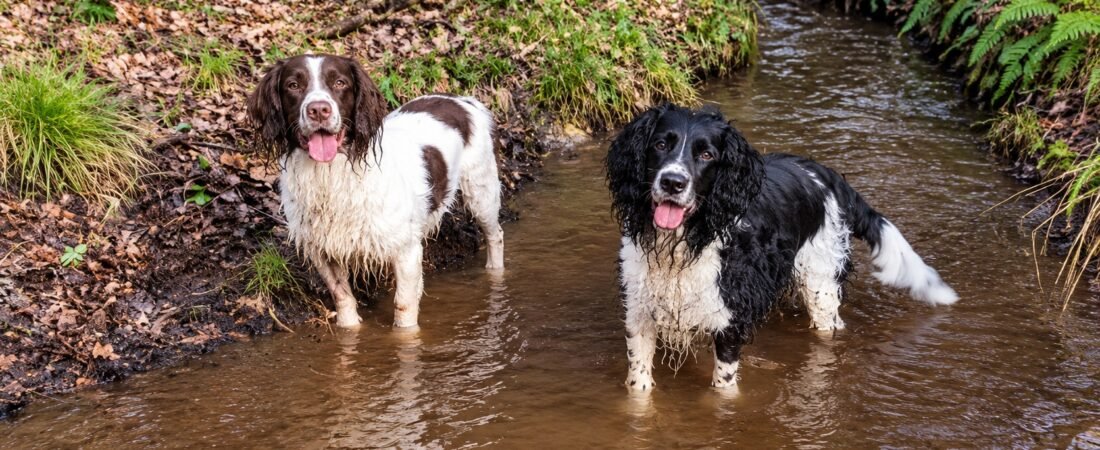
Havoc and Splodge come with us almost everywhere, including on holidays. That’s possible because we know we can rely on their behaviour, and they know what we’re asking of them.
It Starts When They’re Young
We believe routine and socialisation should begin while a dog is young.
That doesn’t mean expecting a puppy to behave like a fully trained adult dog. Training develops gradually, and some of the most useful lessons start with very simple exercises.
One of the first tools we introduce is the whistle.
Why We Use a Whistle
We use an audible whistle, rather than a silent one, because we like being able to hear exactly what command the dog is receiving.
We begin introducing it when a puppy starts going out on a lead.
One whistle means stop and look at me.
At first, whenever we stop, we give one whistle and gently guide the puppy into the sitting position. Repetition gradually teaches the puppy to associate that sound with stopping, sitting and paying attention.
Later, that simple exercise becomes the foundation for much more.
Working at a Distance
As the dog’s training develops, we practise the same command when the dog is farther away.
Once the dog will stop, sit and look towards us at a distance, we can give another instruction.
We can point an arm left or right to send the dog in that direction, or signal for them to carry on.
These are traditional working skills, but we’ve found they’re just as useful in everyday life.
A dog that understands you at a distance can enjoy considerably more freedom while you’re still able to communicate with it.
The Most Important Command of All
For us, however, one command matters above all the others:
Recall.
Our recall signal is two quick blasts on the whistle.
Whatever else we teach our dogs, we want to know that when they’re called back, they come back.
That matters on an ordinary walk just as much as it ever did when training a working dog. There may be livestock, another dog, a road or simply something we’d rather they didn’t investigate.
Good recall gives the dog freedom, but it also gives us confidence.
Training Gives Them a Purpose
Spaniels are active, intelligent dogs. A walk is important, but we’ve always felt that simply tiring their legs isn’t the whole answer.
Training makes them think.
Stopping on command, watching for a direction, waiting for the next instruction and being recalled all give the dog something to concentrate on.
They have a job to do, even if that job no longer involves hunting.
And they seem to thrive on it.
The Pay-Off Comes in Everyday Life
Perhaps the biggest benefit of all this training has nothing to do with working dogs.
Our dogs can be part of our lives.
Because they’re used to listening, settling and behaving around other people, we’re comfortable taking them to different places. They come out with us, travel with us and come on holiday with us.
Of course, they’re still spaniels. They get muddy, they get excited and they certainly aren’t robots.
But they understand the boundaries.
For us, that’s what good dog training is really about. It isn’t about showing off how obedient your dog is. It’s about building enough communication and trust that you can give your dog more freedom and share more of your life with them.